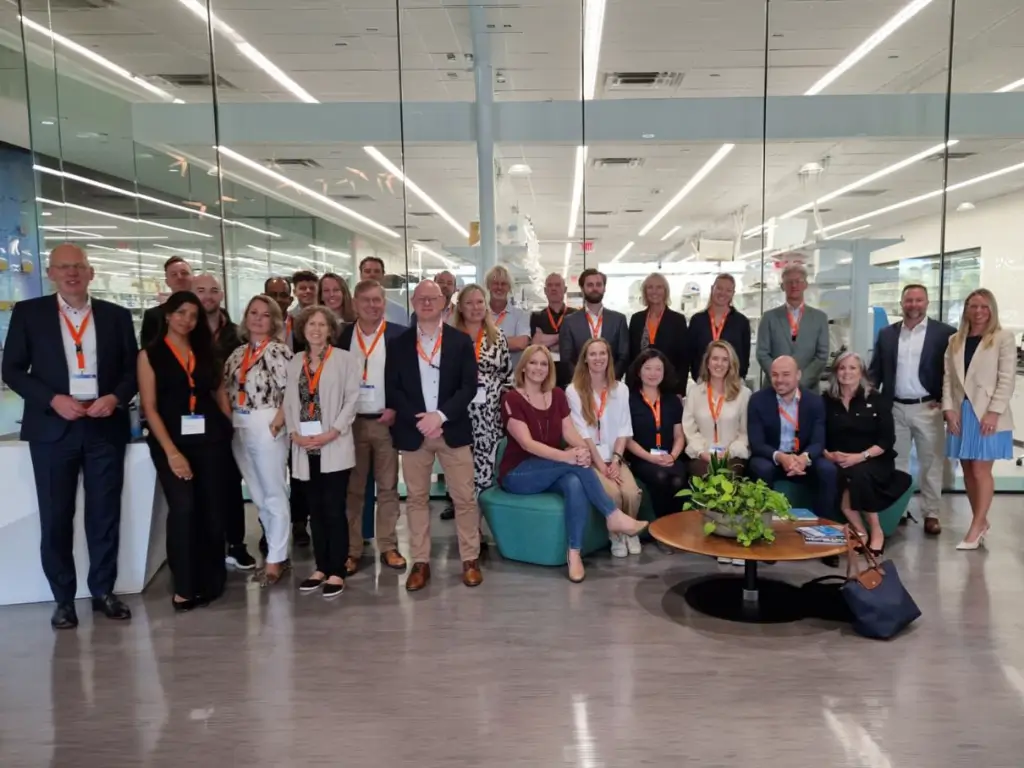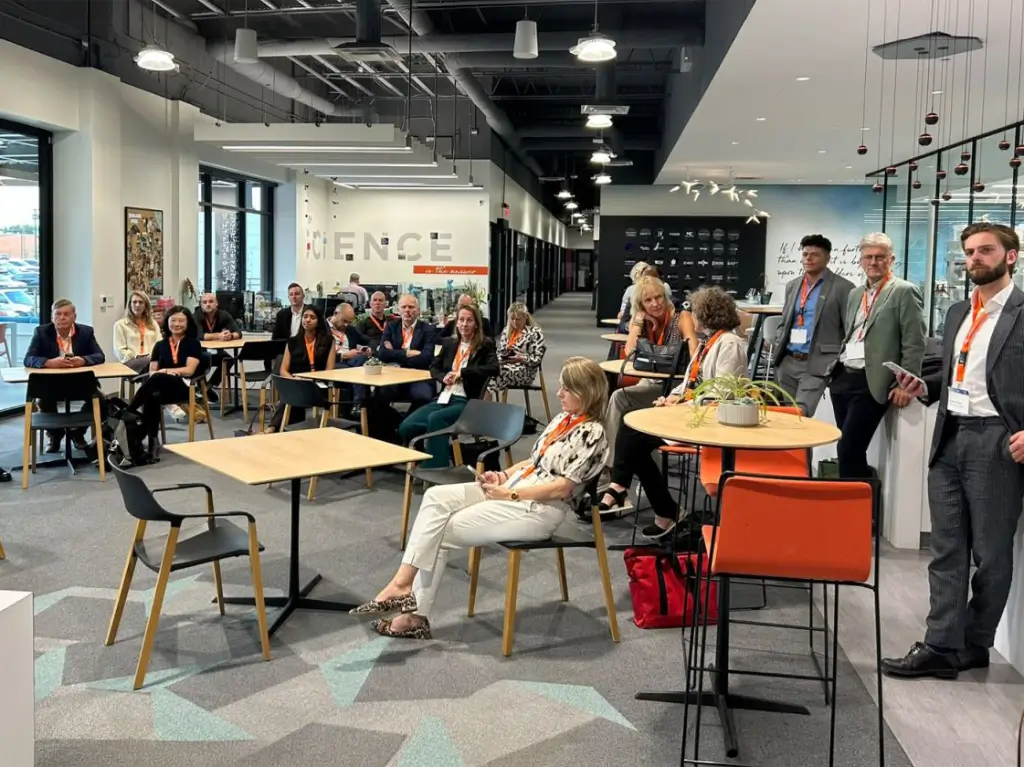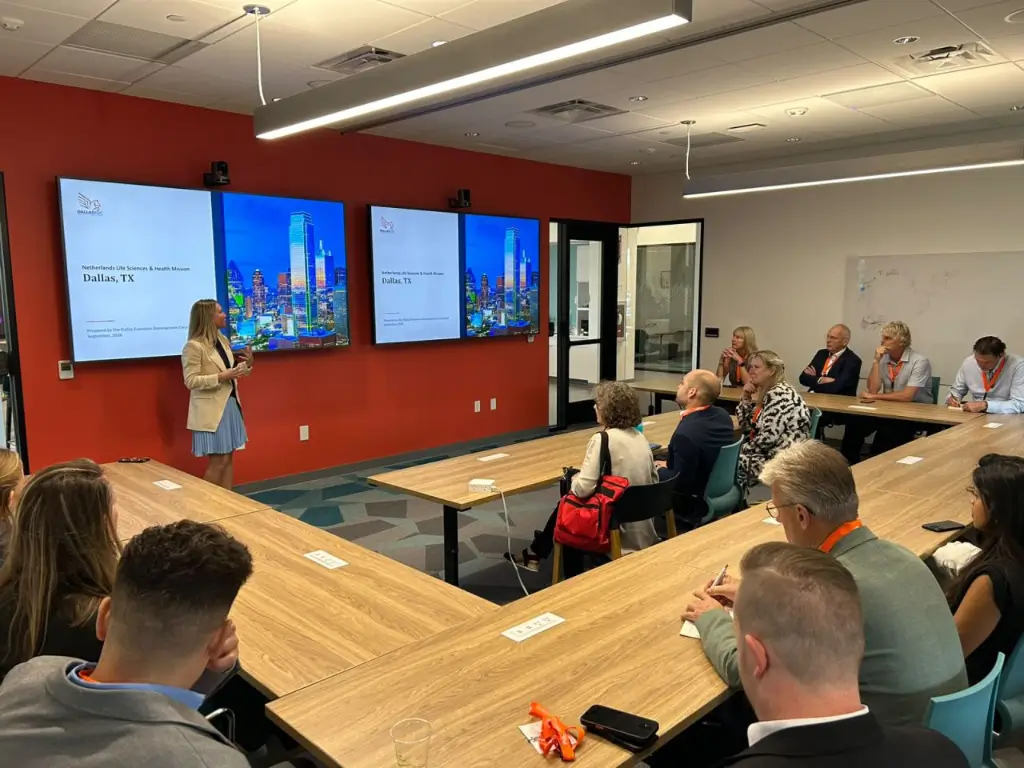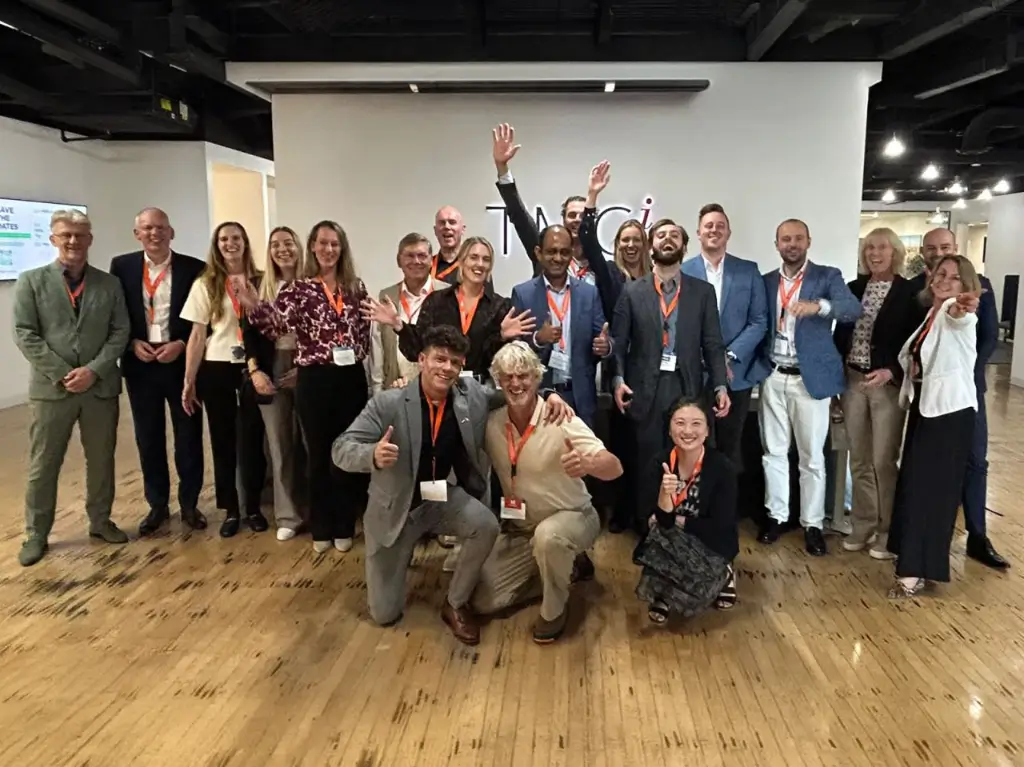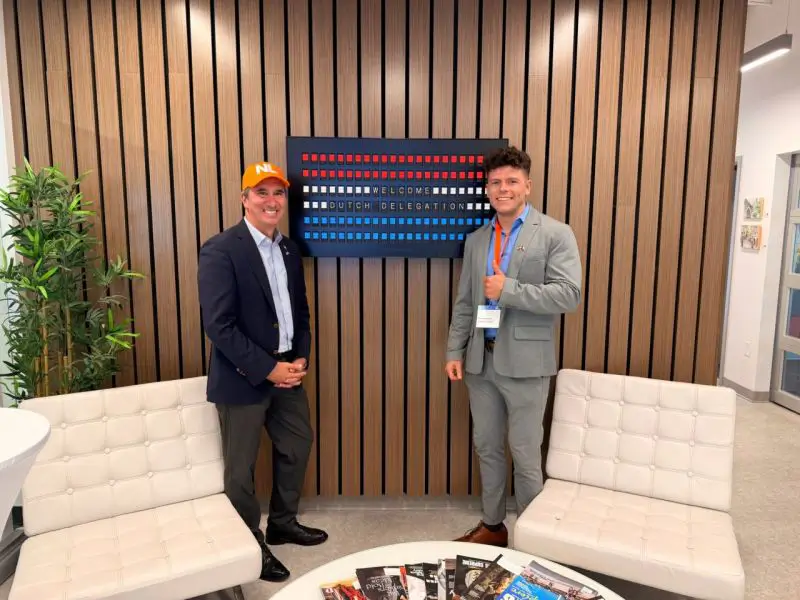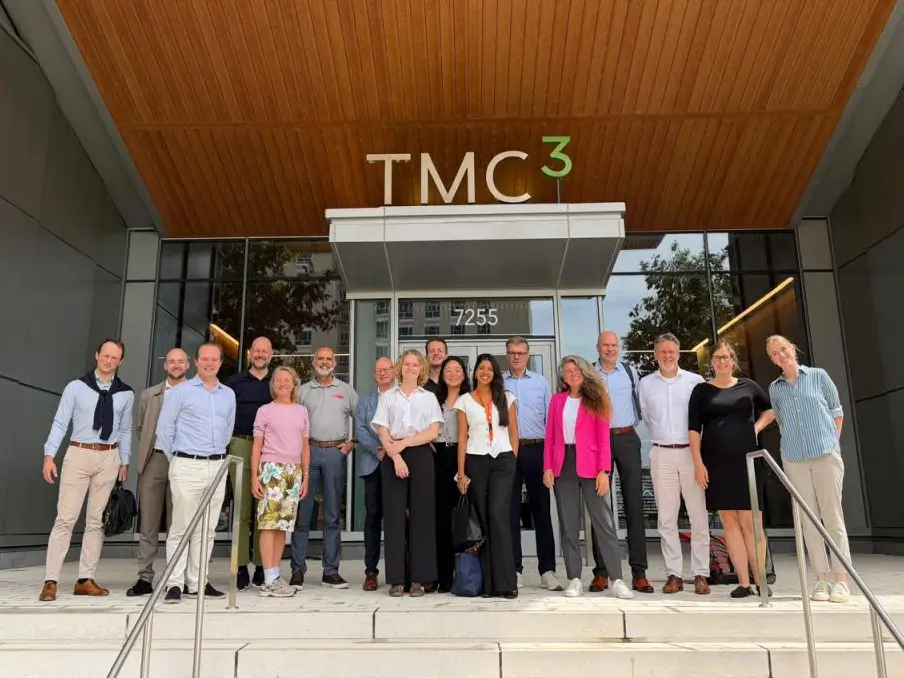
Texas welcomed a strong Dutch Life Sciences & Health (LSH) presence this October as a delegation of 24 Dutch entrepreneurs, healthcare professionals, knowledge institutions and ecosystem partners traveled to Dallas and Houston for the annual Dutch LSH mission to Texas. At the same time, the first Dutch MedTech cohort officially started its six-month BioBridge Accelerator Program at the Texas Medical Center Innovation Factory in Houston.
Together, the two programs brought more than 25 Dutch MedTech and Digital Health companies into direct contact with some of the leading healthcare, research, innovation and investment organizations in Texas.
The mission was organized by the Netherlands Enterprise Agency (RVO), Task Force Health Care, NBSO Texas and the Consulate Generale of the Netherlands in Miami, as part of the multi-year Dutch-U.S. Life Sciences & Health approach. The focus was clear: move beyond general market exploration and create concrete pathways for clinical validation, research collaboration, investment and U.S. market entry.
From the North Texas ecosystem to targeted matchmaking
The mission started in Dallas, where the delegation was introduced to the rapidly growing North Texas life sciences ecosystem through BioNTX, Pegasus Park, BioLabs and Health Wildcatters.
At Health Wildcatters, Dutch companies had the opportunity to present their technologies and engage with local entrepreneurs, investors and healthcare innovators. The BioLabs networking reception at Pegasus Park also created room for targeted introductions between individual Dutch companies and relevant Texan investors, academics and ecosystem partners.
A major highlight of the Dallas program was a dedicated session at UT Southwestern Medical Center. Rather than the traditional institutional visit, the program was built around the individual needs of the participating Dutch companies. The delegation joined curated matchmaking tracks covering cardiovascular and digital monitoring, digital health and AI, cancer and diagnostics, and MedTech, simulation and nursing. The objective was to translate company needs into concrete follow-up, including potential clinical leads, research pathways and next steps.
Houston: Access to one of the world’s leading healthcare ecosystems
The second half of the mission took place in Houston and the Texas Medical Center, the largest concentration of healthcare institutions in the world.
At MD Anderson Cancer Center, the delegation engaged with leaders in strategic industry ventures, technology commercialization, surgery innovation and digital health. Discussions focused on how international companies can engage with a major U.S. cancer center, validate new technologies and build long-term clinical relationships.
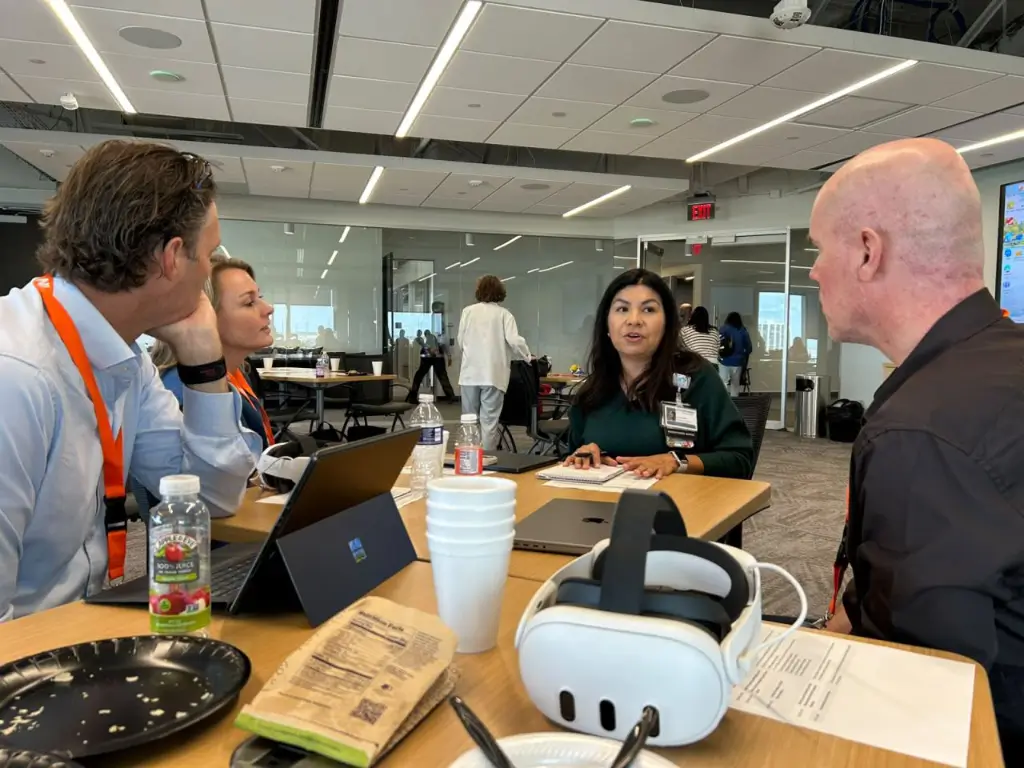
At UT Houston, the collective program was supplemented with carefully curated matchmaking. Dutch companies were seated with senior leaders based on their technology and specific objectives, creating targeted conversations around medical AI, clinical research, public health, nursing, aging and healthcare innovation.
The delegation also visited Baylor College of Medicine, where participants explored opportunities around clinical research, commercialization and collaboration with researchers and physicians.
Several of these meetings have already generated concrete follow-up. The Dutch companies are now pursuing introductions to clinicians, research groups and innovation teams across the institutions visited.
From innovation infrastructure to hospital adoption
On Thursday, the delegation spent the morning at the Texas Medical Center Innovation Factory, where participants learned more about the TMC innovation ecosystem and visited the Therapeutics Labs and Medical Device Labs.
A fact-finding visit to the Memorial Hermann Surgical Innovation & Robotics Institute provided additional insight into how surgical technologies, robotics and new clinical solutions are tested and integrated into hospital environments.
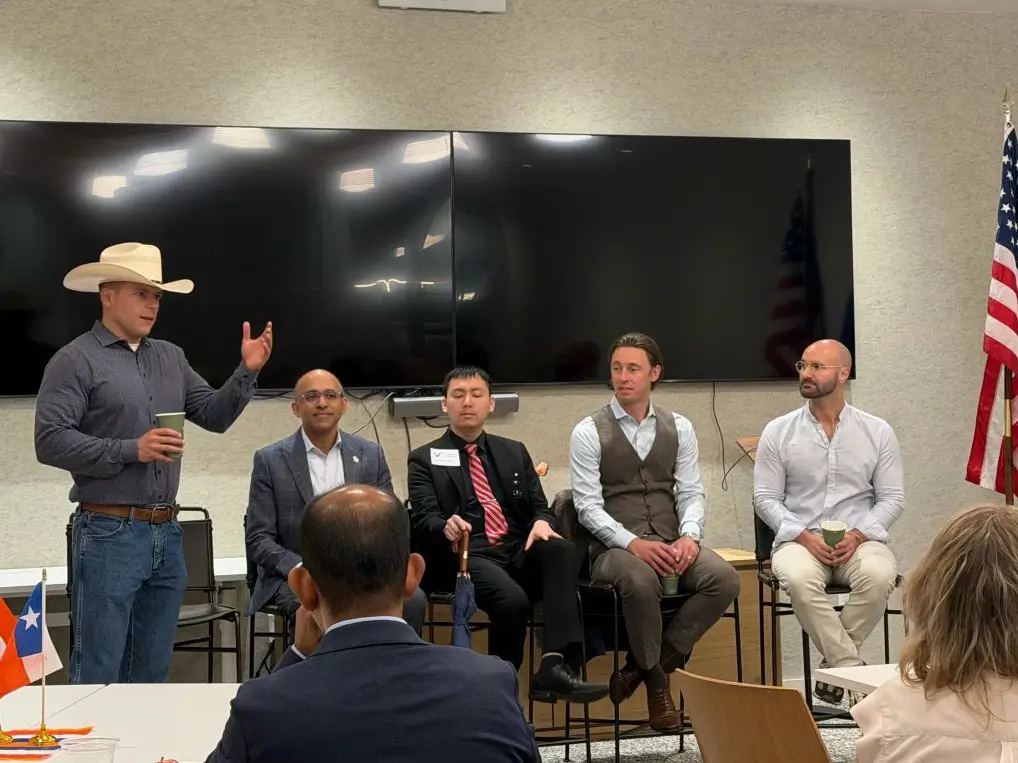
The program the continued at Houston Methodist, where Homer Quintana, Director for Rapid Device Translation, introduced the hospital’s approach to working with external innovators. Pothik Chatterjee presented the Houston Methodist-Rice University Digital Health Institute, followed by a fire side chat with Dutch company Loop Robots about its own experience developing a relationship with Houston Methodist.
In addition to the collective program, NBSO Texas facilitated targeted company meetings with Houston Methodist experts, including discussions around clinical simulation, nursing and infusion care. These individual connections are an important part of the mission approach. For companies entering the U.S. healthcare market, a general introduction to a hospital is often only the first step. Progress usually depends on finding the right clinician, nursing leader, innovation team or research partner and having a very specific proposition for collaboration.
First Dutch BioBridge cohort officially launches in Houston
The mission coincided with another important milestone in the Dutch-Texas healthcare relationship: the launch of the first Dutch MedTech cohort at the Texas Medical Center Innovation Factory.
Twelve Dutch companies have been selected for the six-month BioBridge Accelerator Program:
- Aliform
- Ansana
- Clear.bio
- Flux Robotics
- Implant Preservation Devices
- MindAffect
- MLA Diagnostics
- NBCL
- ShanX Medtech
- SLAM Orthopedic
- Spatium Medical
- VivArt-X
The program gives the companies structured access to the TMC ecosystem and is designed to help them build relationships with clinicians, researchers, hospitals, investors and other potential partners while developing their U.S. strategy.
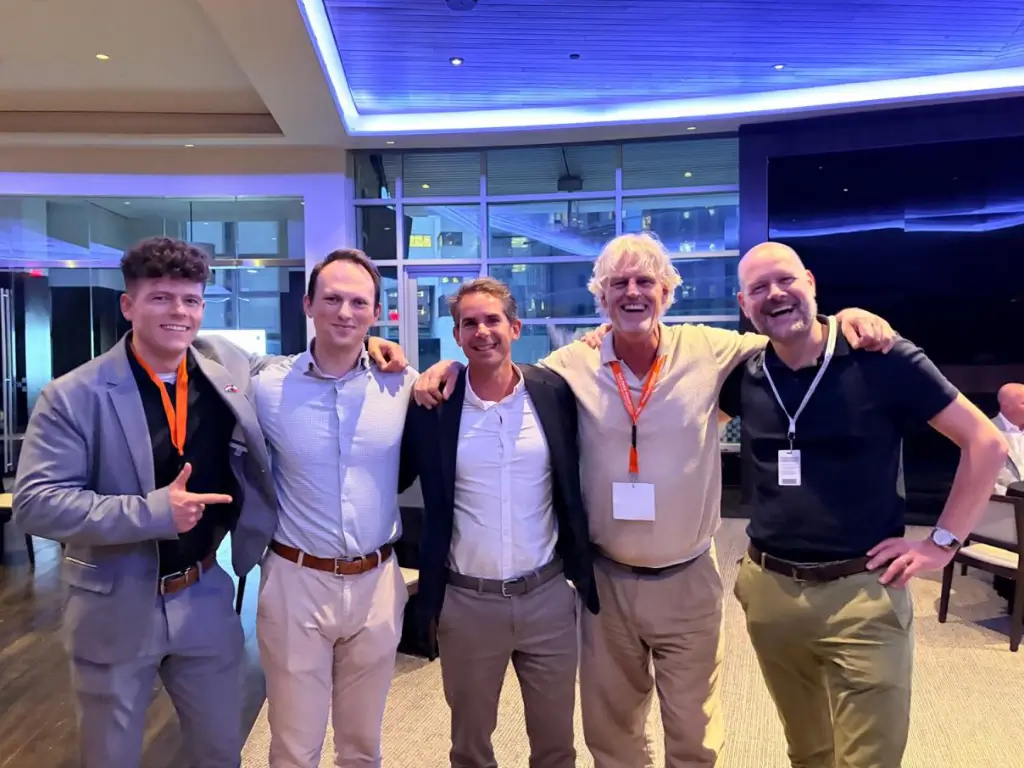
The launch was marked by the Netherlands-Texas Medical Center BioBridge Reception, which brought together mission participants, cohort companies and stakeholders from across the Houston healthcare and innovation community.
For NBSO Texas, connecting the trade mission with the start of the cohort was an important part of the week. It allowed companies participating in both programs to benefit from a larger Dutch presence and created additional opportunities for cross-program introductions and follow-up.
Turning introductions into long-term parnerships
The week concluded at the NBSO Texas office at the Ion with a practical session on navigating the U.S. healthcare market. Experts discussed business setup, building a U.S. team, investment, commercialization, clinical validation and healthcare adoption, followed by individual company conversations.
The mission builds on several years of growing engagement between the Netherlands and Texas in Life Sciences & Health. With the BioBridge cohort now underway and companies already following up on connections made during the mission, the focus will now be on converting these relationships into pilots, research partnerships, investment and sustainable U.S. market entry.